We have just published a new paper in Poultry Science. In this paper, microbiota from dead chicken embryos, eggshell waste collected from hatchery floor when hatching was accomplished and from the caecum of 1- and 4-day-old chicks was compared. Two bacterial species were quite likely transferred from hatcheries to intestinal tract of chick, i.e. E. coli and Enterococcus faecalis, since these bacteria were present both in eggshell waste in hatcheries and in one-day-old chicks. With increased probability, Klebsiella, Proteus and other Enterococcus species were transferred from hatchery environment to chicks as well. These bacteria were common in eggshell waste, were lowly abundant in on-day-old chicks, but re-appeared in the caeca of four-day-old chicks. Additional two less expected observations were recorded. Besides E. coli and Enterococcus faecalis, the caeca of one-day-old chicks leaving hatcheries were colonised by additional 5 bacterial species, i.e. Clostridium paraputrificum, Clostridium disporicum, Clostridium tertium, Terrisporobacter petrolearius and Zhenhengia yiwuensis. Role of these bacteria for gut health of one-day-old chicks remain unknown and represents subject for future studies. Second unexpected finding was on nearly “digital” presence of E. coli and Enterococcus faecalis in the caeca of one-day-old chicks – these bacteria were either present and then formed tens of percent of total microbiota, or were completely absent. There were also differences in colonisation dynamics of E. coli and Enterococcus faecalis. While Enterococcus faecalis in fact disappeared from caecal microbiota by day 4, E. coli multiplied quickly and each four-day-old chick was colonised by E. coli. This colonisation pattern was likely dependent on feed intake which positively selected for E. coli but acted in a negative sense against Enterococcus faecalis. In the case of E. coli, its “digital” presence in the caeca of one-day-old chicks was confirmed also by culture. Only around 15 % of chicks were colonised by E. coli when deployed at farms. In other words, 85 % four-day-old chicks were colonised by E. coli strains that did not originate from hatcheries but were acquired by chicks from farm environment.
Category Archives: News
A new paper on chicken gut microbiota
We published a new review paper on the poultry gut microbiota in June. It is certainly not a standard review that would cover all existing knowledge in detail. Instead, while it is based on previous findings, its main significance is in its future perspective—highlighting where mistakes are being made in our understanding of the poultry gut microbiota at presence and how these can be avoided in the future. If the specific characteristics of poultry are ignored, research will keep producing results with misleading interpretations. However, once we are aware of the specifics in chicken production, this species immediately becomes an attractive model for studying interactions between the gut microbiota and warm-blooded hosts, including humans.

On line presentation for Poultry Science Association and Animal Nutrition Association of Canada
On February 25, 2026, we presented our results during on-line seminar organised by Poultry Science Association together with Animal Nutrition Association of Canada. The whole 15 minute presentation can be seen here.
New paper on mucosal microbiota in the chicken caecum
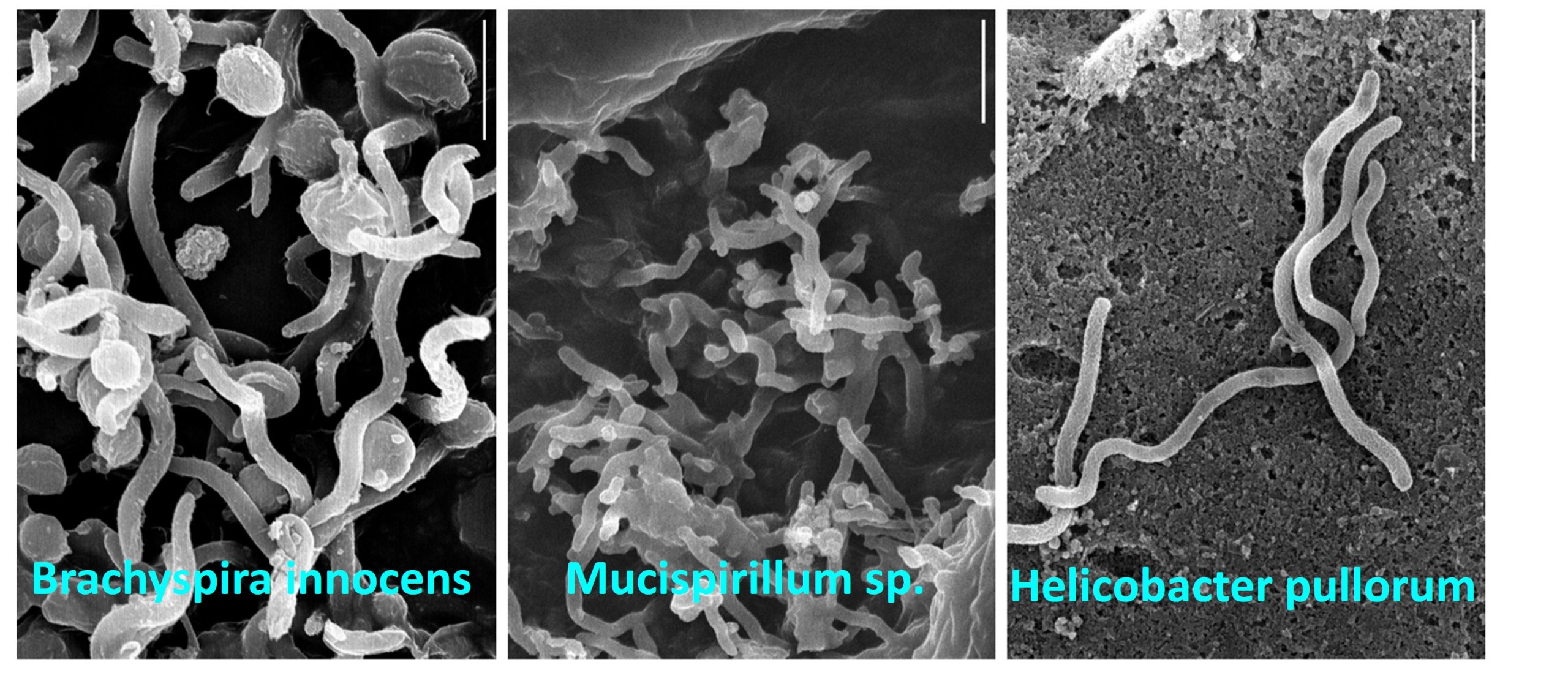
We have just published a new paper in which we define microbiota colonising mucosal surface of chicken caecum. The paper was published in Animal Microbiome and we describe that caecal mucus is colonised by a rather low number of bacterial species from genera Helicobacter, Mucispirillum, Anaerobiospirillum, Desulfovibrio, Brachyspira and Treponema-like spirochaeta. Most of these bacteria are characterisyic by spiral shape of their cells and these bacteria also commonly express type VI secretion system. Additional information including metabolism of bacteria from mucosal surface vcan be found in the paper here.
Probiotics for weaned piglets
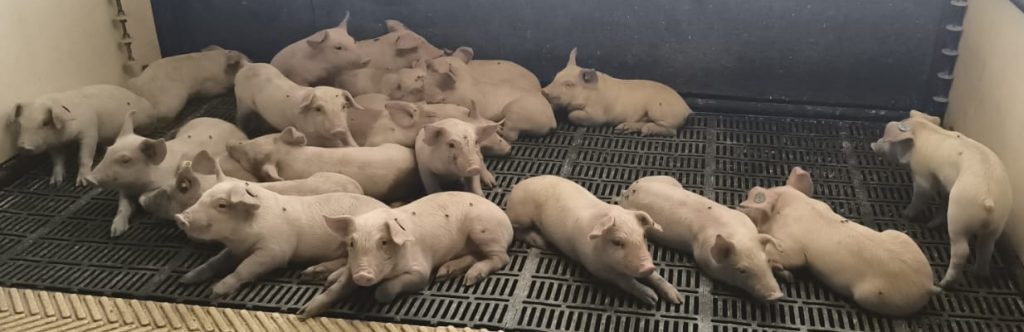
We have just published our new findings on novel types of probiotics for weaned piglets. Composition of tested probiotic mixture corresponds with the processes naturally ocurring in gut microbiota of piglets after weaning. This is why the piglets on the day of weaning were provided a defined bacterial mixture in which 5 different species belonging to genus Prevotella dominated. This report should be considered as a pilot one and not as a completed and finalised story. Despite this, it shows how we think and move into an area which has not been explored that much meaning a use of novel types probiotics besides well known lactic acid bacteria. If you view this publication this way, it migth be challenging and it may stimulate you for similar way of thinking and similar experiments. And this is exactly what we wanted.
QuoCNA probiotics for newly hatched chicks in use
On November 26, 2025 additional 180 000 chicks have been treated with QuoCNA probiotics. These chicks will be resistant to Salmonella or E. coli and will enable antibiotic free production. Probiotics were administered using own prototype QuocnaDrop 🙂 More than 6 000 000 chicks have been treated with QuoCNA probiotics in 2025 in the Czech Republic till the end of November.
Publication on new type of probiotics for newborn piglets
A new publication on new type of probiotics for newborn piglets has been published. This study is based on observations that gut microbiota of nursed piglets is dominated by bacterial species from genus Bacteroides. This is why we prepared a mixtures of 4 different species belonging to this genus and used it for oral administration to newborn piglets within first 12 hours after birth. The mixture affected developmenta of gut microbiota and was of overlall positive effect onn health status of treated piglets. Using such intervention we only sped up the process of gut colonisation in newborn piglets and set up all piglets in a litter to the same starting line, i.e. we did not introduce to the production nothing different from natural processes. Currently we develop this approach furthet so that we should be able to introduce a novel type of probiotic veterinary product to common market in 2026.
Influence of monoacylglycerides on chicken resistance to Salmonella
A new paper has been just published. Feed supplementation with a mixture of C1 to C12 monoacylglycerides resulted in lower Salmonella counts at the end of broiler production cycle. Such finding is important for decreased Salmonella transfer from poultry production to human food chain. More information can be found in the original paper published in Poultry Science, either at web page of publisher https://authors.elsevier.com/sd/article/S0032-5791(25)00486-9, or after direct download of pdf file AcylglyceridesPoultrySci.
Active modification of gut microbiota increase chicken resistance to Salmonella
We tested new types of probiotics for chickens in 14 independent experiments. Using hundreds of chickens, efficacy of 22 different mixtures was tested and compared. Unifying feature of the tested mixtures was that all contained different representatives of genus Bacteroides and family Veillonellaceae. Although initial aim of this study was to identify a mixture of the most effective composition, finally we ended up with a conclusiom that if the mixtures contain representatives of genus Bacteroides and family Veillonellaceae, species and strain composition is not that important. The tested mixtures increased chicken resistance to infection with Salmonella approx. 50 times. The more interesting was the effect against spread of Salmonella among chickens by a mere contact. In such experiments, the tested probiotic mixtures decreased spread of infection more than 1000 times. The tested mixtures increased also chicken resistance to Campylobacter jejuni thought the protective effect was not as high as against Salmonella. The paper can be read in full here.
New paper – microbiota vers chicken immunoglobulins
Our new paper is focused of the interactions between immunoglobulin secretion to lumen of the caecum and composition of bacterial microbiota in chickens. To understand the role of chicken immunoglobulins, we used cell sorting of bacteria with and without bound IgA followed by their identification as well as caecal contents originating from wilde type and Ig deficient chickens. Two may conclusion could be drawn. First, bakteria expressing S-layer proteins on their surface bound low levels of chicken IgA. Second, majority of bacteria common to the caecum were highly coated with IgA. IgA secretion was therefore used more important for fixing normal gut flora in chickens rather than to elimination of gut pathogens. For additional information, see the full paper here.